


If you practice pixel art or DIY mosaic, you're manipulating a principle that's over 2,000 years old: the tessera. Called tesserae in Latin, these small (often square) pieces make up ancient mosaics… exactly as our pixels make up an image today.

What is a tessera?
A tessera is a small element used to compose a mosaic. It is often square, but can also be rectangular or irregular depending on the era and style. In English, the term tessera is the most common; the Latin term tesserae is also found in historical sources.
Tesserae can be made of stone, ceramic, glass, glass paste, and sometimes gilded glass (especially in Byzantine mosaics). Each tessera is a simple unit… but their assembly creates a complex, legible image, full of texture and light.
History of tesserae: from Ancient Greece to Byzantine art
1) The beginnings: pebbles, patterns, and first tessellations
The first mosaics used pebbles and natural stones. Gradually, artisans sought more precision: they began to cut more regular pieces, which allowed for clearer geometric patterns and more detailed figurative scenes.
2) The Roman Empire: spectacular floors and narrative scenes
In Rome, mosaic became a major art form, particularly for the floors of villas and public buildings. Tesserae were used to tell stories: mythological scenes, animals, landscapes, friezes, trompe-l'oeil… The logic was already that of an image constructed tile by tile.
3) The Byzantine era: light as matter
Byzantine mosaics used glass and sometimes gold tesserae, creating vibrant and luminous surfaces. The image changes with the angle, giving an impression of movement. This is not far from the "pixel effect": a minimal unit which, when multiplied, creates visual magic.

Tesserae and pixel art: the same visual language
The parallel is direct: mosaic is a grid image built with tesserae, and pixel art is a grid image built with pixels. In both cases, we work with:
- a minimal visual unit (tessera / pixel)
- a color palette (limited or deliberately constrained)
- precise placement on a grid
- a global image that reveals itself from a distance
In short: modern pixel art is a kind of digital mosaic. That's why the "squared" aesthetic is found in design, street art, home decor, and DIY creations.

Why are tesserae still fascinating today?
Because they impose a creative constraint that frees the imagination. As in pixel art, you have to make choices: simplify a shape, balance colors, suggest a detail with very little information.
This is exactly what makes easy pixel art so addictive: you build a clear image with small units, and you see your visual gradually appear — a real moment of creative relaxation.
Pixel Corner: from pixel art to designer mosaic, to assemble yourself
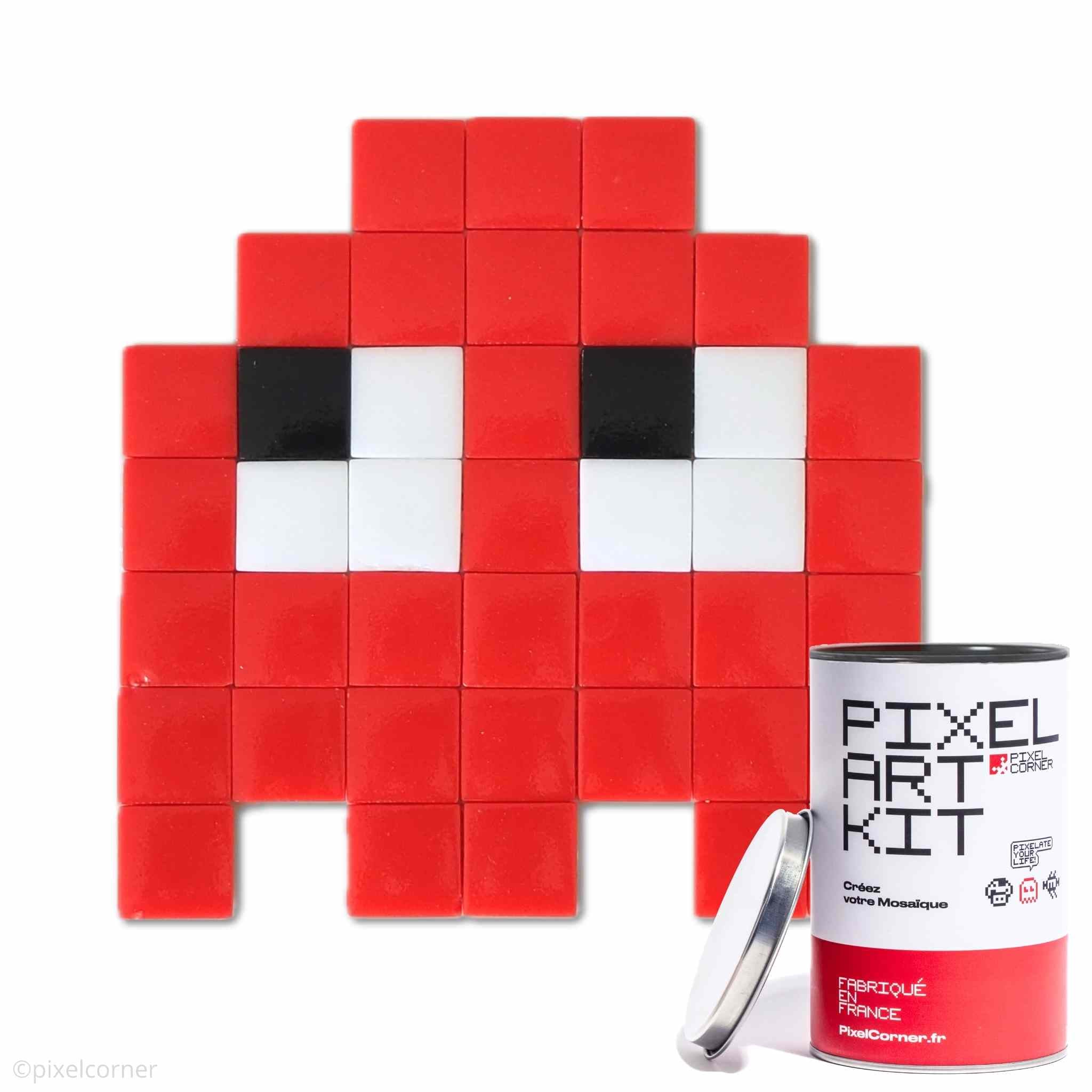
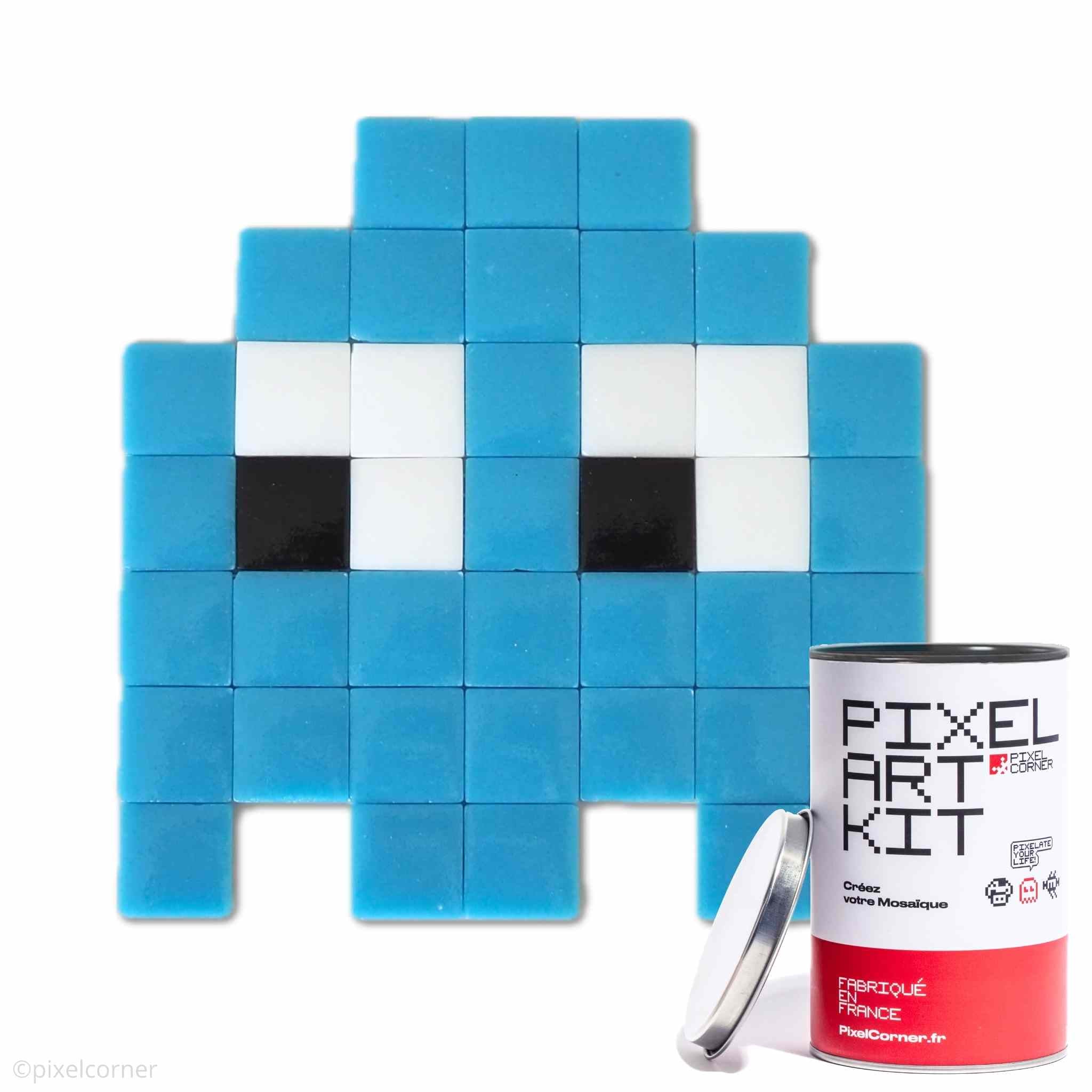
Pixel Corner is the French studio that transforms pixel art into designer wall art to assemble yourself. Made in our workshop in Saint-Ouen from recycled glass, our Pixel Art Kits offer a fun, relaxing, and eco-friendly DIY experience.
Whether you're a fan of retro gaming, street art, or simply looking for stylish home decor: pixel by pixel, create your own work of art. 🌈
🧱 A simple & fun activity
To assemble like a puzzle, from 5 years old (with an adult). It's relaxing, creative, rewarding… and perfect for bringing back a real taste for DIY. Each kit becomes a relief wall art, easy to hang thanks to the included tabs: a perfect gift idea for gamers, decor fans, or creatives.
♻️ Responsible manufacturing
- 🇫🇷 Assembled in France, by hand
- Recycled glass from other industries and manufactured in the Spanish Basque Country
- Natural pigments
- Reusable / recyclable packaging
- Recycled prints
- Carbon-neutral shipping since 2023
📦 Contents of a Pixel Art Kit
Each box contains:
- 🧱 Recycled glass tiles
- 🧴 Indoor/outdoor glue
- 🧩 Gluing grid
- 📘 Template + quick start guides
- 🔗 Wall mounting tabs

To get started more easily, try DIY pixel art with Pixel Corner
At Pixel Corner, we love this bridge between ancient heritage and modern creation: mosaic and pixel art share the same magic… except that pre-cut squares are much simpler to handle and position. You can browse our collection of Pixel Art Kits to choose the model that inspires you.
And to go further, you can also create your own model using Pixel Corner bulk materials (tiles available in 2 sizes) and getting inspiration from our Pixel Card(s) models, to create a unique wall art — combining DIY, design, and decor.
FAQ — Tesserae, mosaic & pixel art
What is the difference between a tessera and a pixel?
A tessera is a physical unit (tile, stone, glass), while a pixel is a digital unit. The visual principle is very similar: assembling simple units to create a complete image.
Are tesserae always square?
No. They are often square to facilitate assembly, but some mosaics use rectangular or irregular pieces depending on the materials and desired effects. Mosaic nippers are often used to cut the tiles, or small mallets for more resistant materials (e.g., marble). Then, it's a bit like a puzzle: you have to find the right shape to progress. 😉
Can you do pixel art with tesserae?
Yes, and it's even one of the most natural ways to "materialize" a pixel visual. It's meticulous work: you can start self-taught with tutorial videos on YouTube, or by finding a mosaic workshop near you. Some works, even small ones, can take hundreds of hours — but the result is sublime and ultra durable.




Leave a comment
This site is protected by hCaptcha and the hCaptcha Privacy Policy and Terms of Service apply.